



Education Resource
The Bald Truth about Hair Loss
If you’ve noticed your hair thinning and started taking photos of bald spots while counting hair fall, continue reading and learn why it’s happening.

3M+
Men affected in the Canada

95%
Success rate with treatment

40+
Age when prevalence increases

70%
Don’t seek treatment
1. Overview
Overview
What is Hair Loss?
Hair loss, medically known as alopecia, is one of Canada’s most common conditions affecting men. Canadian consensus estimates 40–50% of men experience androgenetic alopecia by age 50. In British Columbia, it impacts men across all backgrounds, ethnicities, and sexual orientations.
Hair loss occurs when the hair growth cycle is disrupted or follicles are damaged. Each scalp follicle cycles through growth (anagen ~2–6 years), transition (catagen ~2–3 weeks), and rest/shedding (telogen ~3 months) phases. In androgenetic alopecia (male pattern baldness), genetics and DHT sensitivity cause progressive follicle miniaturization, shortening anagen and producing thinner hairs until follicles stop producing visible hair.
Hair loss is not a choice, lifestyle failure, or masculinity issue, it’s a genetic medical condition deserving evidence-based care.
2. Symptoms
Symptoms
Hair loss presents differently depending on the cause. Recognizing patterns helps you and your healthcare provider select effective treatment. Common presentations in Canadian men:
Gradual thinning on the top of the head
Most common, androgenetic alopecia (male pattern baldness). Hair recedes at temples and thins at crown per Norwood Scale (stages 1–7). DHT shrinks follicles over years, producing finer/shorter hairs. Often starts late teens/20s.
Circular or patchy bald spots
Alopecia areata, autoimmune attack on follicles causing smooth, coin-sized patches on scalp/beard/eyebrows. Affects ~2% lifetime prevalence. Normal skin, no scaling.
Sudden Shedding
Telogen effluvium, excess hair loss (>100/day) when washing/combing after shock (surgery, illness, stress, rapid weight loss). Temporary; regrows once trigger resolves.
Full-body hair loss
Chemotherapy or severe deficiencies (iron, vitamin D, zinc) cause diffuse shedding. Regrowth follows treatment cessation.
Scaly, Spreading Patches
Tinea capitis (ringworm) or scalp psoriasis, inflamed, itchy, scaly areas with broken hairs. Requires antifungal/anti-inflammatory Rx.
3. See a Doctor
When to see a doctor
Normal daily hair shedding is 50–100 hairs. Seek medical advice if you notice:
- Sudden or rapid hair loss over weeks/months
- Hair loss with fatigue, weight changes, or other symptoms (thyroid, anemia, etc.)
- Bald patches with redness, itching, scaling, or inflammation
- Significant psychological distress, anxiety, or social withdrawal from hair loss
- You’re considering Health Canada-approved treatments like minoxidil (OTC, 2%/5%) or finasteride (Rx, 1 mg) and want proper guidance.
- You’re interested in advanced options like PRP therapy, low-level laser therapy, or FUE hair transplants available at BC clinics
For BC men seeking convenient hair loss solutions, contact EDPills.com online. Our Canadian service offers virtual consultations, Health Canada-approved prescriptions (finasteride, minoxidil), and fast discreet shipping directly to your door, no waiting room visits required.
4. Causes
Causes
Hair loss has many plausible causes, and often more than one factor is involved. Understanding what is driving your specific hair loss is essential to choosing the right treatment approach.
Hereditary
Androgenetic alopecia, commonly known as male pattern baldness, is by far the most common cause of hair loss in men, accounting for the majority of cases. This hereditary condition is driven by a sensitivity of certain hair follicles to dihydrotestosterone (DHT), a potent androgen formed from testosterone. In genetically susceptible follicles, long‑term exposure to DHT causes progressive miniaturization, so hairs become thinner and shorter with each cycle until some follicles stop producing visible hair.
Contrary to popular belief, the tendency to develop androgenetic alopecia can be inherited from either parent, not just the maternal grandfather’s side. Epidemiologic studies suggest that roughly 30–50% of men show male pattern baldness by age 50, making it one of the most common conditions men experiences. It is a very common genetic variation rather than a sign of poor health, and effective treatments are available for men who wish to slow or partially reverse the process.
Age
As men age, hair growth naturally slows. The anagen (growth) phase of each follicle becomes shorter with each cycle, meaning hairs do not grow as long and are replaced less efficiently. This age-related thinning is distinct from androgenetic alopecia but often occurs alongside it. Hormonal shifts associated with aging, including changes in testosterone and DHT levels, further compound the effect on hair follicles. Preventive hair care and early intervention can significantly slow this process.
Scalp Infection
Fungal infections of the scalp, particularly tinea capitis, can cause patchy hair loss in affected areas. This type of scalp infection is more common in children but can occur in adults, especially those with compromised immune function. Bacterial infections, folliculitis, and seborrheic dermatitis can also damage hair follicles and disrupt growth cycles. Ketoconazole shampoo, an antifungal agent, is sometimes used both to treat fungal scalp conditions and, off label, as a component of hair loss management due to its mild anti-androgen properties.
Medications
A wide range of medications can trigger medication-induced hair loss. Common culprits include chemotherapy drugs, blood thinners (anticoagulants), betablockers, antidepressants, retinoids, anabolic steroids, and some antifungal medications. This type of hair loss, a form of telogen effluvium, typically begins two to four months after starting a new medication and is often reversible once the drug is discontinued or changed. If you suspect a medication is causing your hair loss, speak with your prescribing physician before stopping any treatment.
Scalp Psoriasis
Scalp psoriasis is a chronic inflammatory skin condition that produces thick, silvery-white scales and red patches on the scalp. While psoriasis itself does not directly destroy hair follicles, the inflammation, scratching, and harsh removal of scales can cause temporary hair loss in affected areas. Traction alopecia, hair loss caused by repeated tension or pulling, can worsen matters if individuals aggressively try to remove plaques. Treatment of the underlying psoriasis typically leads to hair regrowth.
Thyroid Disease
Both hypothyroidism (underactive thyroid) and hyperthyroidism (overactive thyroid) can cause diffuse hair loss across the entire scalp. Thyroid hormones play a direct role in regulating hair follicle cycling, and when levels are disrupted, widespread shedding can occur. This is an important cause to identify and rule out, since thyroid disorder is fully treatable, and with proper thyroid management, hair loss typically reverses. A simple blood test (TSH) can screen for thyroid dysfunction. Nutrition and hair health are linked, as thyroid disease can also interfere with the absorption of iron, biotin, and other hair-supporting nutrients.
5. Risk
Risk factors
Multiple factors can increase a man’s likelihood of experiencing significant hair loss. Understanding these risk factors can motivate early action and preventive hair care:
- Family history: Having first-degree relatives with androgenetic alopecia significantly increases your own risk, regardless of whether those relatives are on your mother’s or father’s side.
- Hormonal imbalances: Elevated DHT sensitivity, low testosterone, or thyroid disorders can all accelerate hair loss.
- Nutritional deficiencies: Iron deficiency, vitamin D insufficiency, low biotin, and zinc deficiency are all associated with increased hair shedding and poor follicle health. Nutrition and hair health are deeply interconnected.
- Chronic psychological stress: Prolonged emotional stress is a welldocumented trigger for telogen effluvium, causing stress-related hair loss months after the stressful event.
- Medical conditions: Autoimmune disorders (including those that cause autoimmune hair loss like alopecia areata), scalp infections, and inflammatory skin conditions all pose elevated risk.
- Hairstyling practices: Tight braids, ponytails, cornrows, or extensions can cause traction alopecia, hair loss from chronic mechanical tension on the follicle.
- Smoking: Research suggests smoking may reduce blood flow to hair follicles and accelerate androgenetic alopecia.
- Certain medications: As noted above, several drug classes list hair loss as a documented side effect.
6. Prevention
Prevention
While hereditary hair loss cannot always be prevented, there is convincing evidence that early intervention, healthy lifestyle choices, and targeted treatments can significantly slow progression and support healthier hair for longer. Here is what the evidence supports:
Start evidence-based treatment early:
Minoxidil (topical or oral) and Finasteride are the two Health Canada approved treatments with the strongest clinical evidence for male pattern baldness. Minoxidil works by stimulating blood flow to hair follicles and prolonging the growth phase. Finasteride works by inhibiting the enzyme that converts testosterone to DHT. Both are most effective when started early before significant follicle damage has occurred. Consult a physician before starting either.
Support nutrition and hair health:
Ensure adequate intake of iron, vitamin D, biotin, and zinc through a balanced diet or supplementation as guided by bloodwork. Deficiencies in these key nutrients can exacerbate shedding and impair regrowth.
Manage stress proactively:
Stress-related hair loss is real and preventable. Regular physical activity, quality sleep, mindfulness practices, and professional psychological support can mitigate the hormonal effects of chronic stress on hair follicles.
Be gentle with your hair:
Avoid hairstyles that create prolonged tension on follicles. Use mild, sulphate-free shampoos and avoid excessive heat styling. Ketoconazole shampoo (1-2%) used a few times per week may provide modest additional benefit for some men.
Explore advanced treatments:
For men with more advanced hair loss or those seeking additional options, several evidence-supported treatments are available at BC hair clinics. Low-level laser therapy (laser therapy) has been cleared by Health Canada as a device for hair regrowth. Platelet-Rich Plasma (PRP) injections, which use growth factors from your own blood to stimulate follicles, are offered at many BC dermatology and hair restoration clinics. Follicular Unit Extraction (FUE) is a minimally invasive surgical hair transplant option for men with stable donor areas.
Treat underlying conditions:
If blood tests reveal a thyroid disorder, nutritional deficiency, or other medical cause, treating that root condition is the single most effective step you can take for hair regrowth.
Key Takeaways
Hair loss is common, manageable, and, in many cases, treatable. Here is what every man in BC should know:
- Hair loss affects most men to some degree, with androgenetic alopecia (male pattern baldness) being the most common cause, driven by genetics and DHT.
- Symptoms vary gradual thinning, patchy bald spots, sudden shedding, and scalp changes can each point to different underlying causes.
- See a doctor if hair loss is sudden, accompanied by other symptoms, or causing emotional distress.
- Common causes include hereditary factors, aging, scalp infections, medications, scalp psoriasis, and thyroid disease.
- Risk factors include family history, nutritional deficiencies (iron, vitamin D, biotin, zinc), chronic stress, and certain medications.
- Prevention and treatment options include Health Canada approved treatments like Minoxidil and Finasteride, ketoconazole shampoo, lifestyle modifications, laser therapy, PRP, and surgical options like Follicular Unit Extraction (FUE).
- Prompt action matters: the sooner hair loss is addressed, the broader the range of effective options available.
- Hair loss does not define you. Whether you choose to treat it, embrace it, or explore all your options, you deserve stigma-free, evidence-based support.
Medical Disclaimer
This page is for informational purposes only and does not constitute medical advice. Always consult a licensed healthcare provider for diagnosis and treatment. Health Canada-approved treatments are referenced throughout this article.
Baldness
Male Pattern Baldness
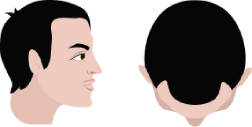
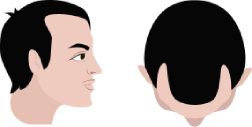
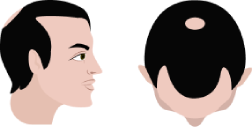
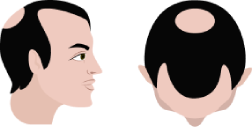
The Norwood scale, also called the Hamilton-Norwood scale, is the main way to measure how much hair a man has lost due to pattern baldness. Men usually go through specific stages of hair loss over many years, and the Norwood scale uses simple images to show these stages.
Stage 1
Minimal Hair Loss
No significant hair loss or recession of hairline
Stage 2
Slight Recession
Slight recession of hairline around temples
Stage 3
Visible Recession
Deeper hairline recession with first signs of clinical balding
Stage 4
Moderate Loss
Further frontal hair loss and enlargement of crown bald spot
Stage 5
Advanced Loss
Crown and frontal areas have larger bald areas
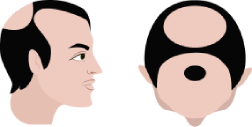
Stage 6
Extensive Loss
Bridge of hair disappears, frontal and crown areas merge
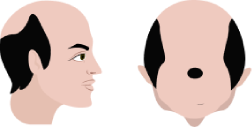
Stage 7
Most Advanced
Most severe form with only a band of hair around sides and back
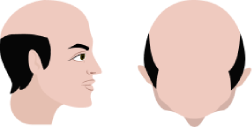
Myths
The Myths
Many myths surround hair loss, including misconceptions about when it happens, why it happens, and who it affects.

Direct Sun
Sunscreen – not just for skin, but for hair myths too!

Masturbation
The only thing your daily routine is affecting is your bedtime story choices.

Natural High Testosterone
Being man enough is not a real cause of hair loss.

Mother
Dads might dodge blame for hair loss, but the truth is, you can inherit it from Mom or Dad.

Hats
Your favorite headgear is not on a mission to sabotage your follicle. But wash it regularly.

Shampooing
No need to stage a protest against showers – shampooing won’t send your hair into exile.
References:
- PubMed. A Canadian Consensus on Androgenetic Alopecia: Approach and Management. https://pubmed.ncbi.nlm.nih.gov/40986632/
- National Library of Medicine. Male Androgenetic Alopecia. https://www.ncbi.nlm.nih.gov/books/NBK278957/
- National Library of Medicine. Androgenetic Alopecia. https://www.ncbi.nlm.nih.gov/books/NBK430924/
- Canadian Dermatology Association. Alopecia. https://dermatology.ca/public-patients/diseases-conditions/hair-conditions/alopecia/